


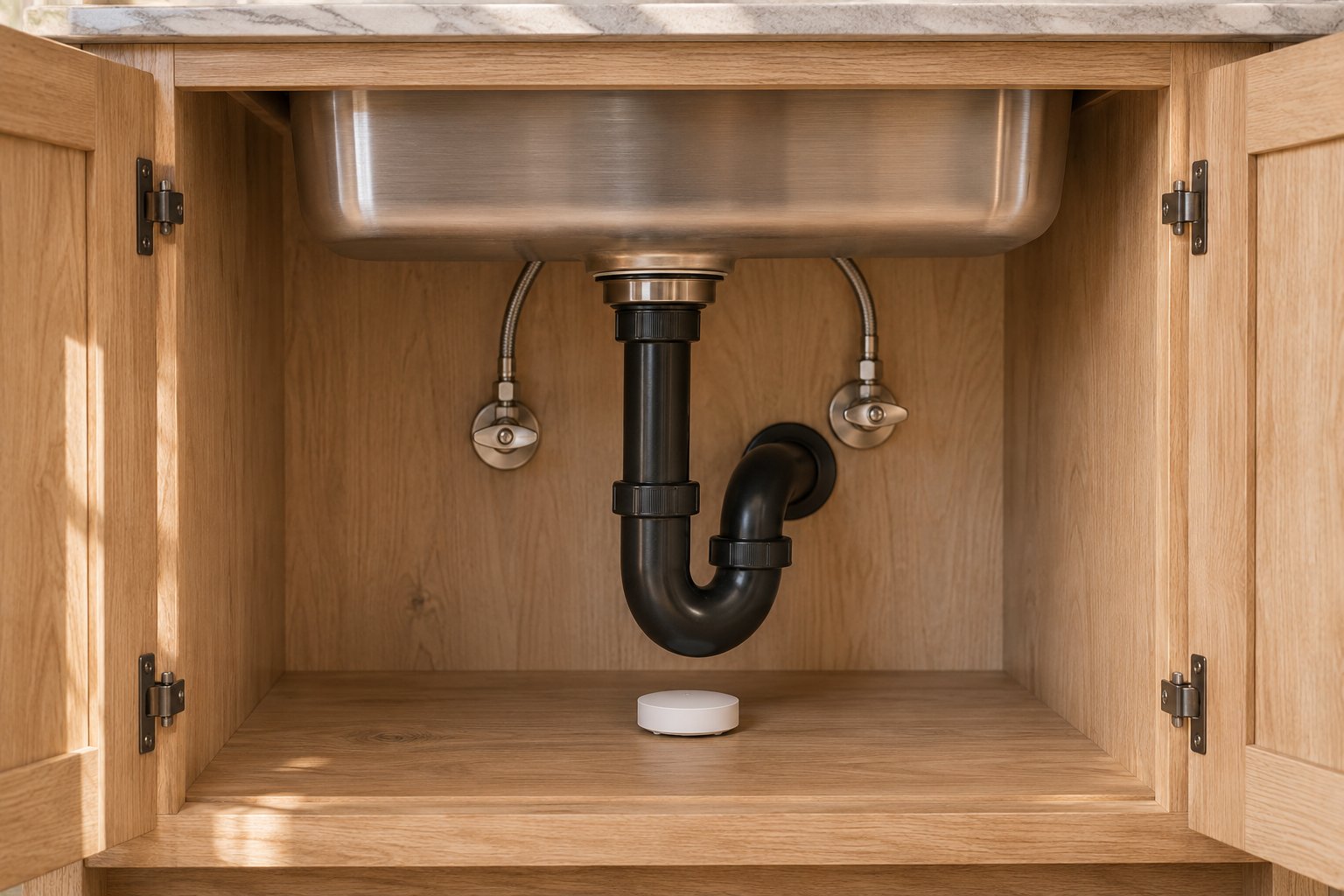
When a Leak Alert Arrives: A Lake Oconee Owner’s Local Response Plan
A leak alert at your Lake Oconee home can arrive while you are hours away. The alert is useful, but it does not answer who should receive the message, who can authorize a plumber, or how that plumber will enter. Those decisions belong in a local response plan prepared before an alert arrives.
Choose who receives and owns the alert
Check the device notification settings with the appropriate provider and identify a primary decision contact plus a backup. Agree on how local support is requested; do not assume a notification automatically books a property visit.
Keep a private list of approved professionals and access arrangements. Device messages, photographs, and contractor findings should be kept in one incident record so the next person does not have to reconstruct the sequence.
A fictional alert-to-plumber handoff
This is an illustrative workflow, not an actual client incident or a promised response time. The timing and actions depend on the circumstances and agreed availability.
- Alert received: owner records device, location, and timestamp.
- Owner contacts the agreed local representative and states what is known.
- Safe observations, if available, are reported without diagnosing the source.
- Owner authorizes the selected qualified plumber and the agreed scope.
- Access is arranged privately and the appointment is confirmed.
- Plumber’s findings and proposed additional work go to the decision contact.
- Approved work and any remaining follow-up are documented.
Write down authority before it is needed
Specify who may request a diagnostic visit and who approves repairs. If you use a spending or scope threshold, choose it with the provider and record it; there is no universal limit that fits every home.
Do not place water-system operating instructions into a generic response sheet. Any shutdown arrangements should be property-specific and confirmed with qualified professionals. Nobody should enter an unsafe area to investigate an alert.
Close the communication loop
Ask for the plumber’s written findings, work completed, and any recommended follow-up. Then update the owner record: resolved, awaiting approval, awaiting parts, or needing another assessment. Avoid marking an issue resolved merely because the alert stopped.
Property Stewards Lake Oconee can discuss local coordination within your care plan. A written handoff improves clarity; it does not guarantee response times or prevent damage.
Continue Planning Your Home Care
For local services, visit Property Stewards Lake Oconee. These related resources provide more detail:
Frequently Asked Questions
Does a leak alert identify the source of a problem?
No. A device alert is information to investigate. A qualified professional should assess the cause and required work.
Who authorizes the plumber?
The homeowner or designated decision contact should authorize the visit and any repairs under the written arrangement.
Should access codes go in the incident log?
Keep access credentials in the agreed private channel. The log can record who arranged access without exposing the credentials.
Does local coordination guarantee damage prevention?
No. Scope, availability, site conditions, and specialist response vary. Do not treat a coordination plan as a guarantee.
Contact Property Stewards
Call Property Stewards Lake Oconee at 762-815-3223